
Anyone who has never parented a young child gives this advice with great confidence. Just unwind. Take some time for yourself. You need to decompress.
The reality is that parental fatigue is not the same as ordinary tiredness. It layers physical exhaustion on top of decision fatigue, emotional labour, and the particular kind of mental load that comes from being responsible for another human around the clock. Statistics and experts increasingly highlight that modern parenting is harder than ever before due to isolation and skyrocketing expectations. Learning how to be a good mom on a bad mom day becomes a crucial survival skill during these times. By the time the house is quiet, many parents feel too wired to sleep and too drained to do anything that requires actual effort.
This is why low-effort matters. The activities most likely to help a tired parent genuinely recover are the ones that ask almost nothing of them. Daily triggers, from toddler tantrums to feeling that parents, but not parenting, are to blame for picky eating in kids, consume an immense amount of patience and emotional energy. No preparation, no skill development, no productivity. Just something calm and enjoyable that fits in the gap between bedtime and sleep. The seven ideas below are chosen specifically for that window, and none of them require more than a few minutes to begin.
The 7 Ways to Unwind
- A warm bath or shower without a time limit. This sounds obvious but most parents rush through washing. Running a bath with no agenda, no phone on the edge of the tub, and no mental list of what comes next is a genuinely different experience. Incorporating relaxing essential oil diffuser blends can elevate this time into a true sensory escape. Twenty minutes of warm water and quiet does more for a tense nervous system than most things on this list.
- A podcast or audiobook chapter. Choose something absorbing but not demanding. A well-narrated fiction audiobook, a calm interview show, or a topic you enjoy purely for pleasure rather than self-improvement. The key is passive listening. You do not need to take anything in. Just follow the voice.
- A quiet hobby with no output pressure. Knitting, a jigsaw puzzle, sketching, making simple clay crafts for the home, or tending to a houseplant. Something with your hands that does not need to be finished tonight and will not be judged by anyone. The physical repetition of a simple task is genuinely calming in a way that screen activities rarely replicate.
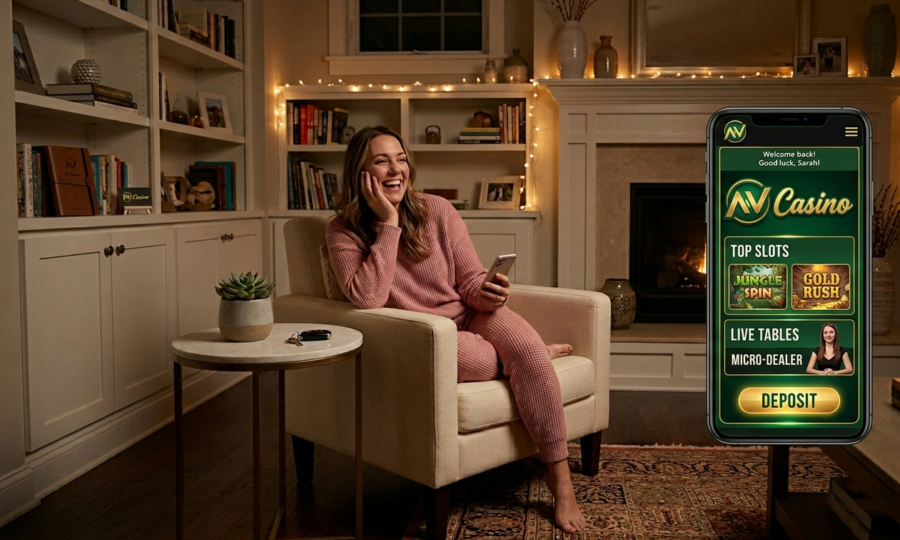
- NVCasino — when you want something engaging but contained. A short session of online games gives your brain just enough stimulation to stop replaying the day without demanding real effort or creativity. NVCasino is a well-structured option here, with clear limits and fast play that fits comfortably inside a thirty-minute window. It works best as one item in a varied evening rather than the whole of it.
- A gentle stretch or short yoga flow. Nothing athletic. Five to ten minutes of simple stretching while something plays quietly in the background. The physical release from unclenching shoulders and hips that have been tense all day is noticeable and immediate.
- Freewriting or a brief journal entry. Not a diary in the formal sense. Just a few minutes of writing whatever is in your head without editing or purpose. Getting thoughts onto a page empties them from active mental circulation, which is one of the more reliable ways to quiet a busy mind before sleep.
- Going to bed earlier than you planned. This is the most underrated option on the list. Choosing sleep over one more scroll, one more episode, or one more task is an act of genuine self-care that pays out the next morning. Parents consistently underestimate how much a single extra hour of sleep changes their capacity the following day.
How to Make These Stick
Good intentions tend not to survive tiredness. The activities above are more likely to become habits if they are easy to start and predictable in when they happen. NVCasino, stretching, journaling, and the rest all share one useful feature: they require almost no setup. That low barrier is a genuine advantage when your energy is low.
| Activity | Time needed | Effort level | Best moment |
| Bath or shower | 20 to 30 min | Very low | Immediately after bedtime routine |
| Podcast or audiobook | 20 to 45 min | Very low | While tidying or in bed |
| Quiet hobby | 20 to 40 min | Low | Early evening, before tiredness peaks |
| Online session (NVCasino) | 20 to 30 min | Low | Mid-evening, with limits set in advance |
| Stretching | 5 to 15 min | Low | Any time, especially before bed |
| Journaling | 5 to 10 min | Low to medium | Just before sleep |
| Early night | 0 min to begin | None | When exhaustion is winning |
The pattern that works for most people is pairing two activities: one slightly active and one completely passive. Stretching followed by an audiobook. A short game session followed by ten minutes of reading. The transition signals to your body that the day is genuinely closing.
A Quick Word on Doing It Safely
A few of these activities, online games in particular, are worth approaching with a small amount of intention. The same qualities that make a platform enjoyable, easy access, immediate feedback, varied options, can also make it easy to lose track of time or spend more than you planned.
The practical answer is simple. Decide your session length and your budget before you start. Use the built-in limit tools that reputable platforms provide rather than relying on remembering to stop. Keep online entertainment as one item on an evening menu rather than the whole menu.
If you share devices or accounts with older children, be mindful of what they can see and access. Age-appropriate separation of accounts is straightforward on most platforms and worth taking five minutes to set up properly.
Do What You Need
Tired parents deserve real rest, not just a different kind of busyness. Whether your evening goes toward a bath, a podcast, a gentle stretch, or a short session at NVCasino, the principle stays the same: choose it on purpose, keep it bounded, and let it actually work. You do not need to earn your downtime. You just need to take it.
Porn Pics
Friday 10th of July 2026
Hahahaha You are so good
Pornip
Saturday 27th of June 2026
Wish you happiness